Frog chorus after first rain
November or December — the first proper thunderstorm triggers twenty species of frog calling at once. Sit on the veranda with a cold drink and listen.
For Nature Lovers
Slow mornings, crackling fires, and bushveld silence — a proper break from screens and cities.
Why nature lovers choose us
Flexible rates — short breaks and long stays welcome.
Some guests come to Kudu simply to breathe. Walk the veld. Watch a waterhole at dusk. Braai under a sky that actually has stars. Read a book without notifications. We keep things simple on purpose — comfortable, private chalets, a bar for sundowners, and the kind of quiet you can feel.
A year on the farm
The bushveld is never the same place twice. Tap a month — see what's alive, what the air feels like, how a slow morning and a slow evening actually look at that time of year.
Real numbers from the farm — not generic data. Every month has its own kind of quiet.
What we are not
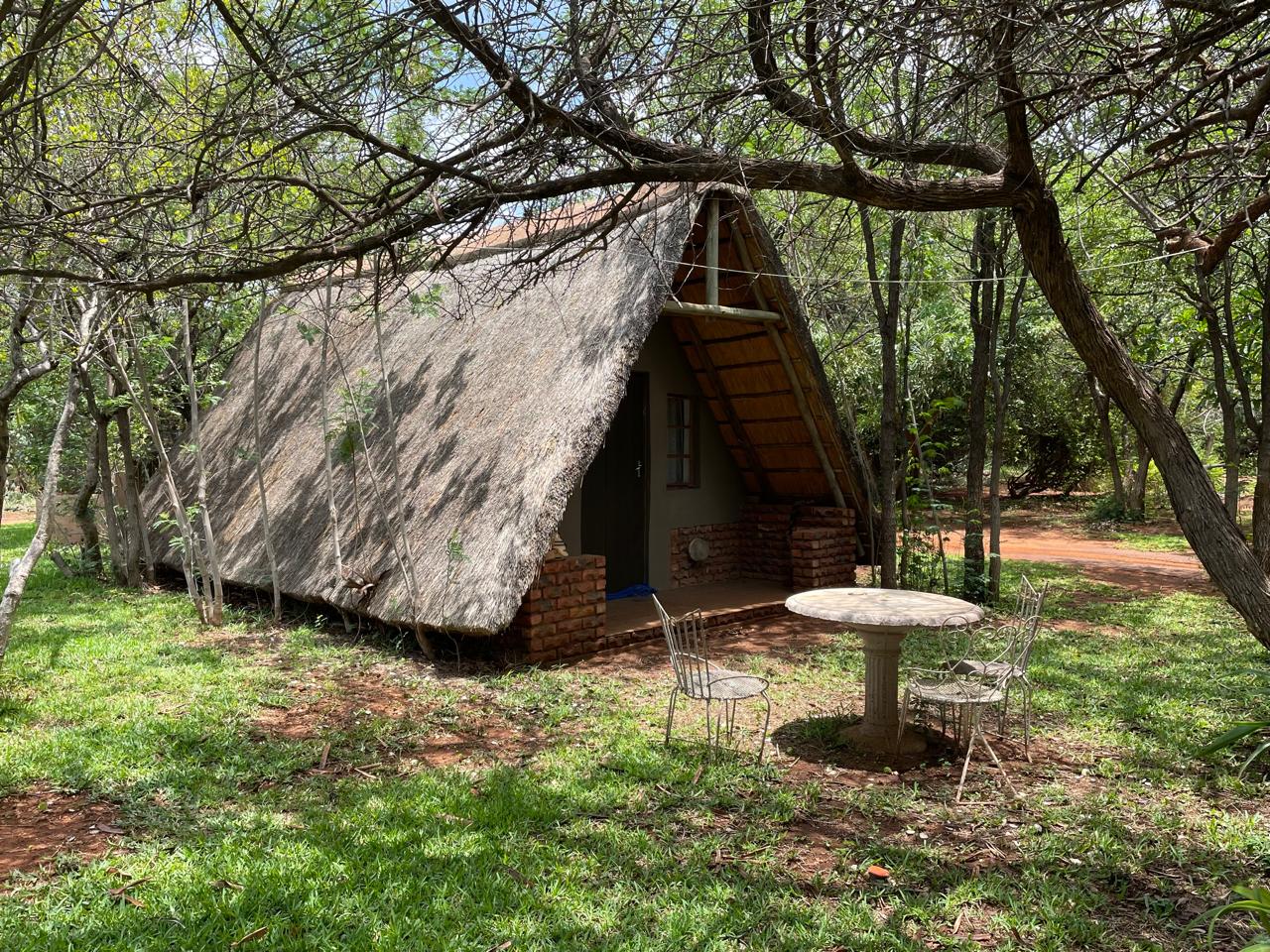
Kudu is a working game farm that has three residences, fifteen chalets, and two A-frames scattered through the trees. That means — crucially — nobody is running the day to a schedule. No 6am wake-up drives, no 7pm mandatory dinner. You arrive, you settle, and you let the farm set your pace. Most guests find that by day three they are sleeping twelve hours and don't know what day it is. That is the point.
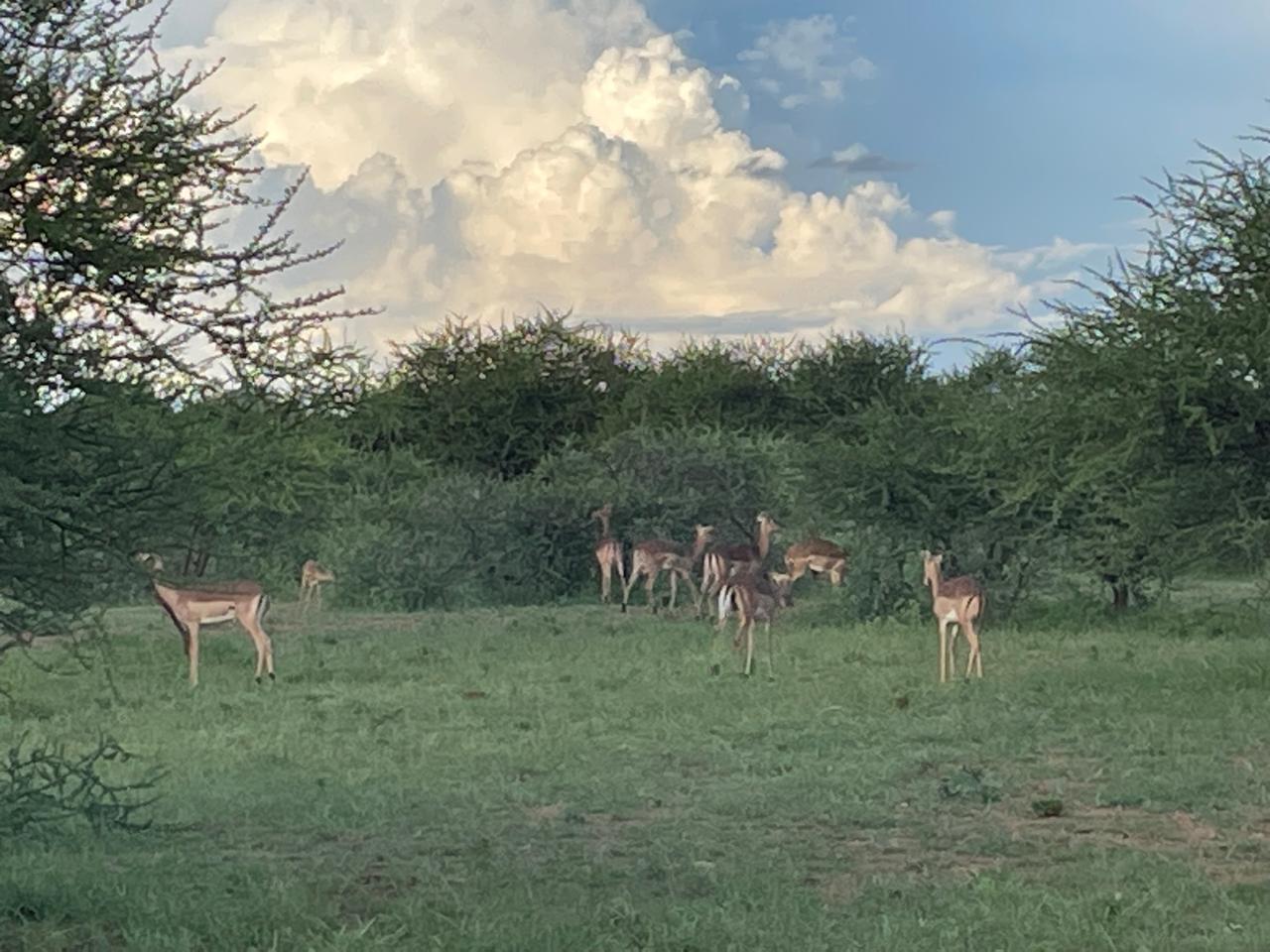
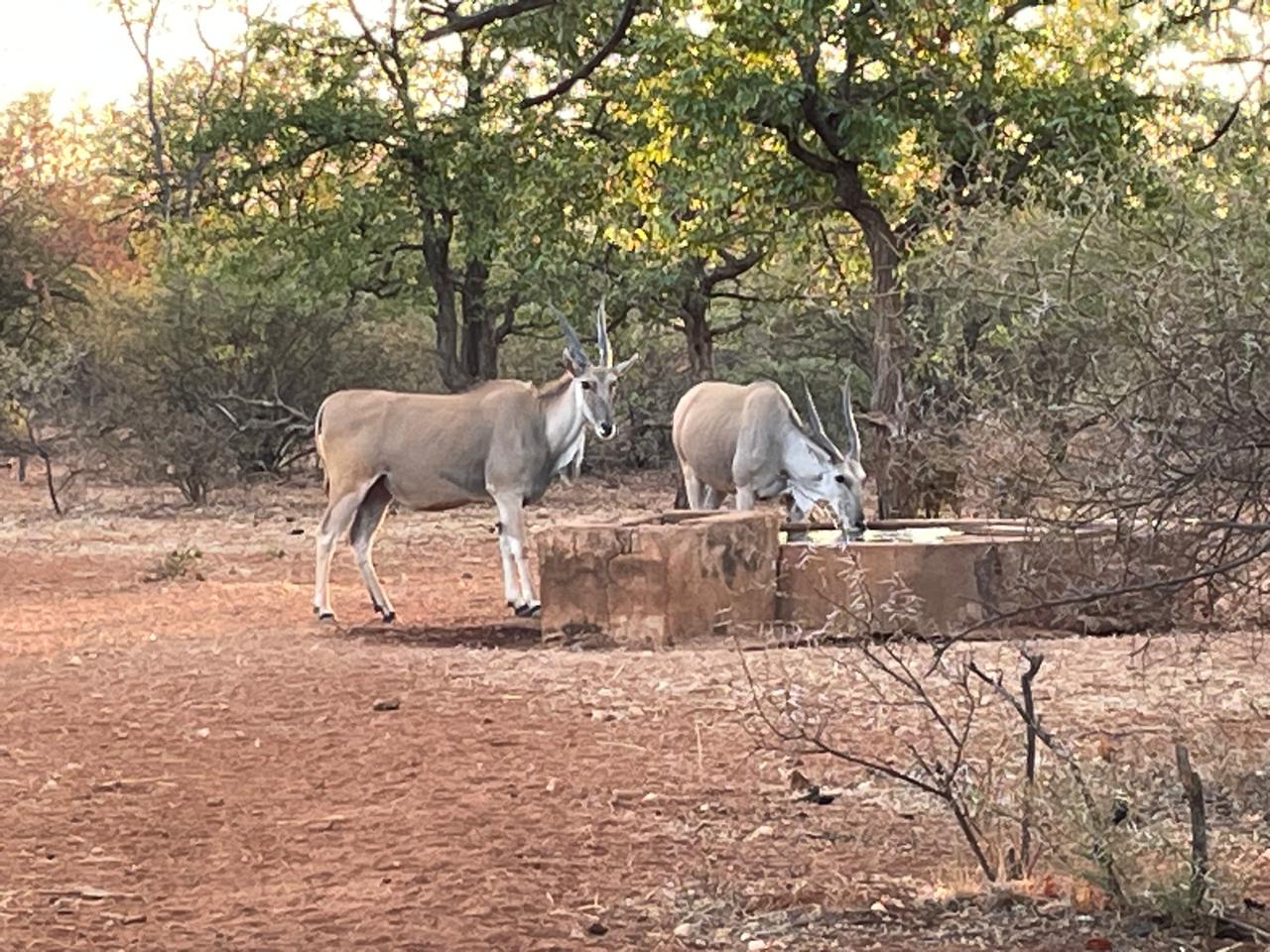
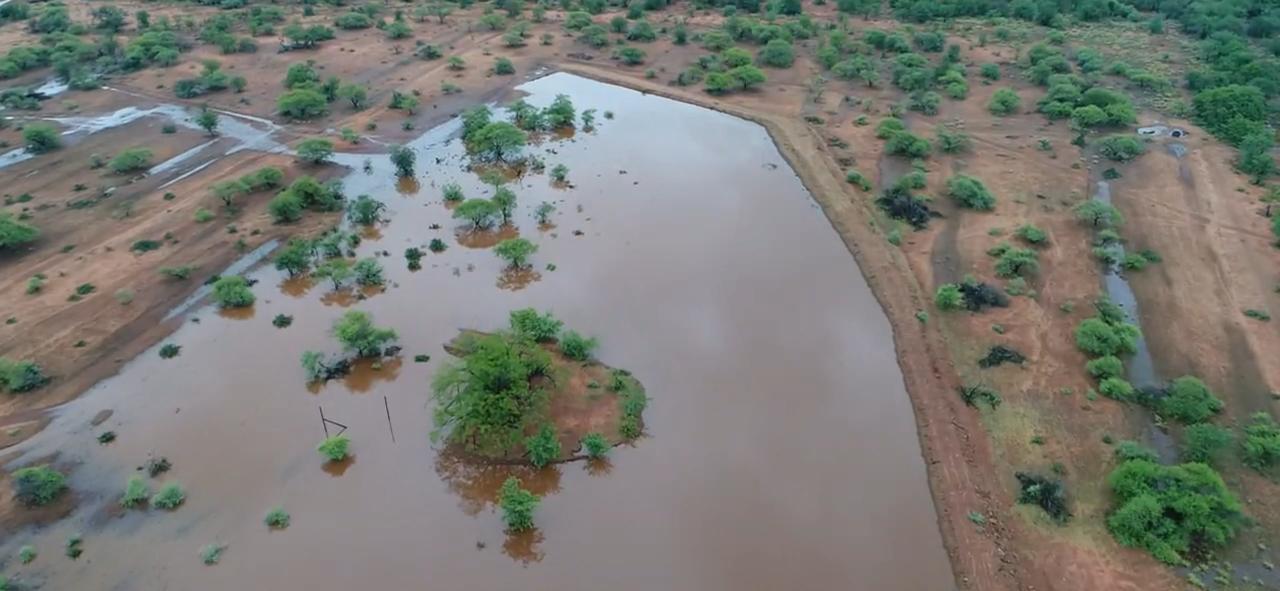
The property is game-fenced and malaria-free — a detail that matters enormously if you are travelling with children under five. Giraffe, kudu, impala, wildebeest, nyala, warthog, and the full supporting cast of smaller wildlife move freely within the fence. At the waterhole and at the edges of pans, early morning and late afternoon, the viewing is as good as any unguided bushveld experience we know.
Self-catering is the default, because that is what most people actually want. Cook when you like, eat when you like. If you'd rather not, meals are available on request — breakfast delivered to your chalet, a packed lunch for a walk, a cooked dinner on the firepit. There is a proper on-site bar for sundowners (closes around 10pm most nights), and a firepit lit most evenings for guests who want company.
The camp dog, Wolf, is the unofficial host. He will show you around if you let him. Henri (the owner) lives on the property and is available for a chat or a recommendation or an informal bakkie drive; he will not organise your day for you, because you should organise it yourself.
Out-of-the-box: scorpion walks at night (the property glows under a UV torch — more Parabuthus on any given evening than most people believe exists on a single farm). Frog choruses after the first rains of summer. Aloe excelsa — the tall tree-aloe — in flower July–August, with sunbirds in mobs. Mopane worms in season (December-January) — a local harvest and a cultural experience if you're curious. Milky Way in winter, directly overhead. None of this is scheduled. All of it is available if you ask.
What the year looks like
The bushveld year has two main characters — wet summer and dry winter — each with their own pleasures. Here is what each month of the year tends to bring.
Peak green. Impala lambs everywhere — newborns by the dozen. Thunderstorms most afternoons, spectacular and clearing. Frog choruses after rain. Hot (32–36°C) but the pool and afternoon storms cool things nicely. School holiday tail end — book ahead for second week.
Our baseline survey month — 445 species logged across the property in 14 days. Migrant birds, active reptiles, wildflowers, butterflies. Still warm and still with rain. A quiet favourite month for nature lovers.
Bush begins to yellow. Temperatures step down. Kudu bulls begin to move. Birders in the know start arriving. Perfect walking weather mid-month onwards.
The landscape turns honey-gold. Warm 25°C days, 12°C nights. Firepit nights begin. Leopard tracks easier to find in the softer morning sand. Autumn Easter is busy — book early.
Cool mornings, warm days. Mopane foliage yellow, marula bare. Animals start concentrating at water. Quiet month in tourism terms — great if you want the property nearly to yourself.
Coldest nights (5–8°C), firepit nightly, long slow mornings. Game at water at dawn and dusk — viewing is exceptional without leaving the lodge. Milky Way core overhead. Dry, dusty, clear. Our favourite months for a proper slow visit.
Warming into the 20s again. Aloe excelsa in full flower — spectacular tree-aloes, sunbirds mobbing them. Dry and beautiful. Still not crowded.
Temperatures climbing back. Dust on roads. First kudu calves. Bushpig active with young at dusk. Hot middays mean early mornings and late afternoons are the magic hours.
Hottest, driest month. Mopane leaves crisp. Game tied tight to water — almost guaranteed viewing at waterholes. Thunder heads building most afternoons but rain not yet consistent. Powerful skies, sharp sunsets.
First proper storms from the north. Grass flushes within days. Insects return, then frogs, then the birds. The bushveld literally comes alive. Warm, humid, dramatic.
Impala lambing in full swing. Green grass, wildflowers, busy birds. Mopane worms in season — a local harvest. Thunderstorm afternoons. Christmas/New Year window books ahead — not crowded, but held by returning families.
On the property
in a week.
Nature Lovers welcome
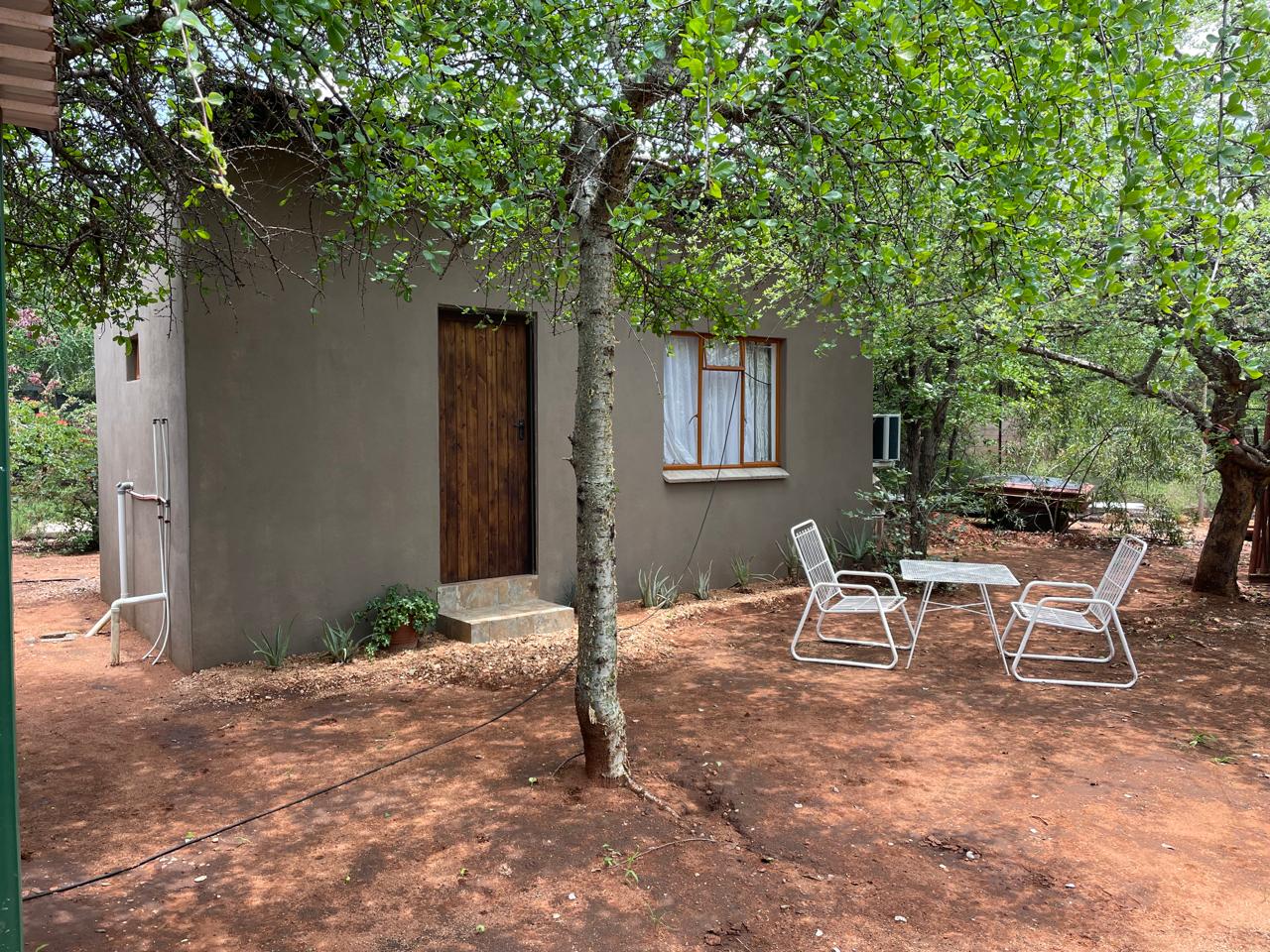
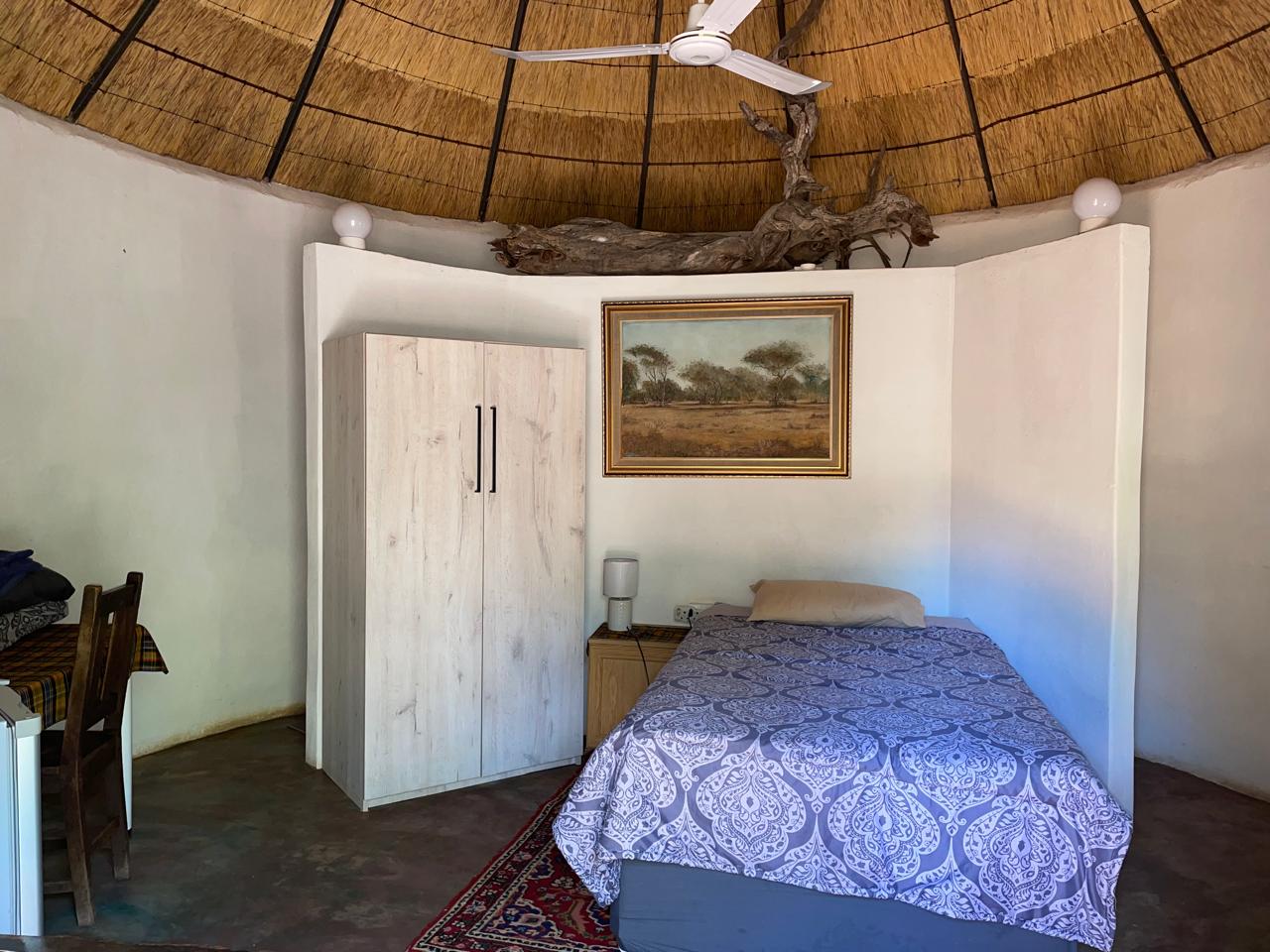
Comfortable chalets
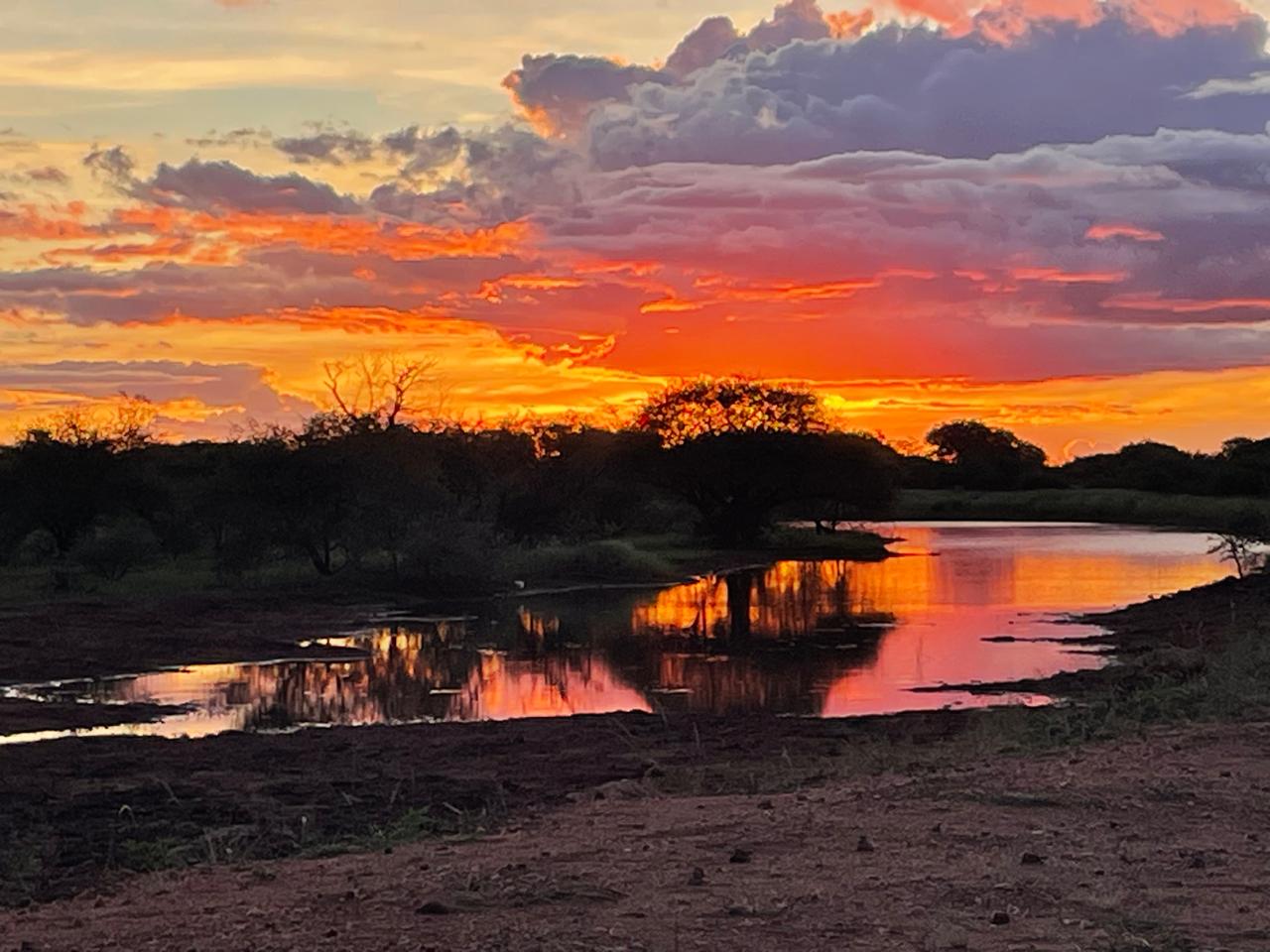
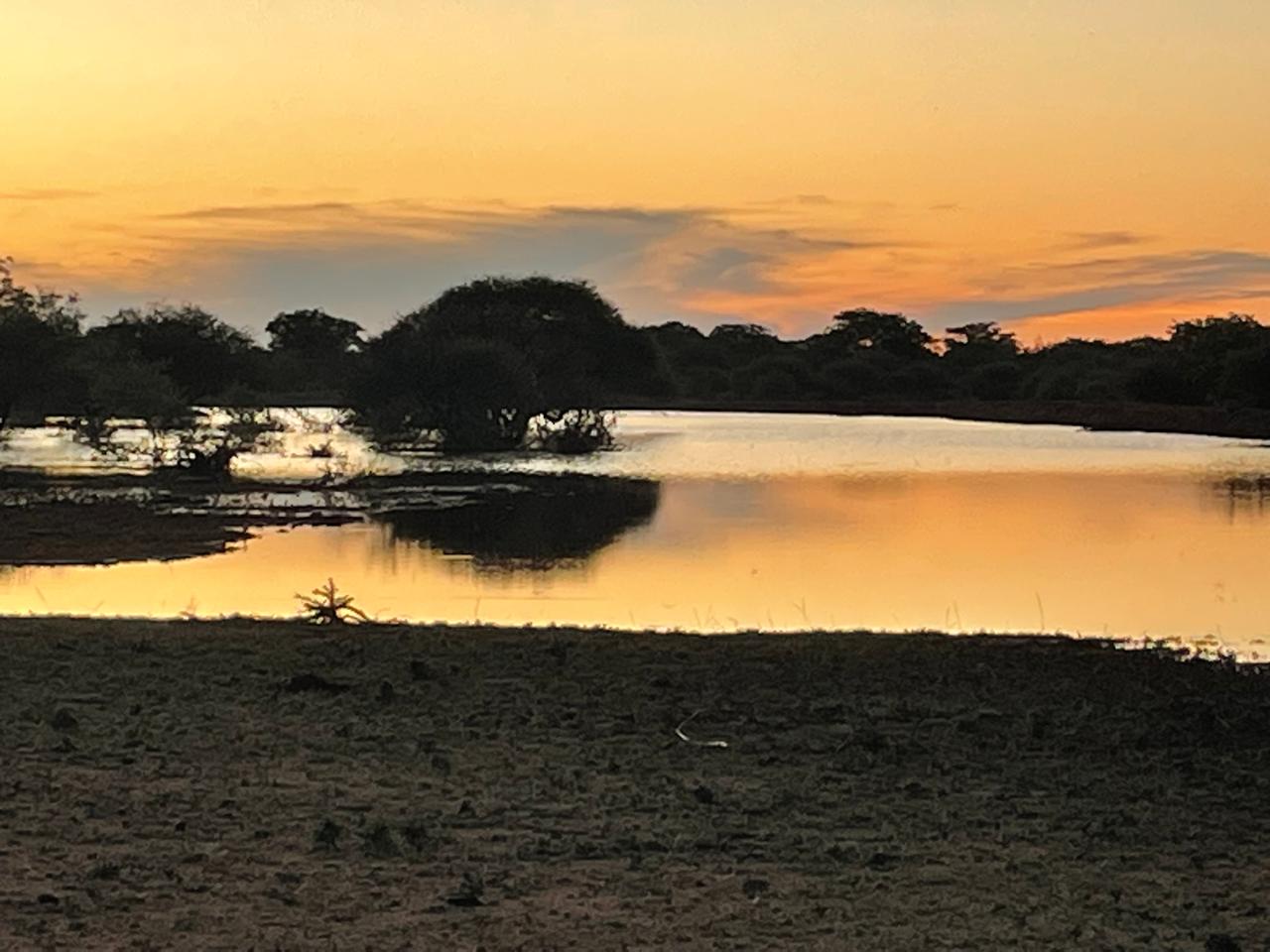
Bushveld sunsets Out-of-the-box moments
These are the small, specific things guests mention when they write to us after a visit — not the view from the pool, but the unexpected stuff.
November or December — the first proper thunderstorm triggers twenty species of frog calling at once. Sit on the veranda with a cold drink and listen.
The camp dog will walk you around the property in the morning if you ask nicely. He has opinions about which paths are best.
June–July, directly overhead. No binoculars needed. One of the most memorable moments guests describe — stepping out of the chalet at 11pm and looking up.
The firepit lasts as long as guests do. Strangers become conversation partners; owners join; conversation drifts to the stars.
Cold drink in hand, kudu at the waterhole, sun setting behind the western hills. It is as obvious as it sounds; it is as good as it sounds.
Plan lightly
Two nights is a drive and a sleep. Four is when you actually unwind. Most guests we talk to wish they had booked longer.
If you have young children or are simply averse to prophylactics, this is a rare Limpopo bushveld experience that doesn't require them.
Chalets are all within a 5-minute walk of the pool, bar, restaurant. A vehicle helps for Mapungubwe day trips but the camp itself is self-contained.
Even in summer, mornings can be cool. Winter: a fleece and warm hat are essentials. Closed walking shoes for veld walks (thorns, snakes).
Shoprite, Spar and Pick n Pay in Musina are fully stocked. Pre-order a grocery delivery on request and we will have it in your fridge on arrival.
Kids grow into this kind of holiday fast — open space, no traffic, firepit safety under supervision. Dogs welcome with prior notice.
WiFi is strong enough to work from if you need to. Equally, ignore it for a week and no-one will be upset with you.
Mapungubwe National Park (1.5 hours) is genuinely world-class — archaeology, landscape, elephants. Venetia Mine passes close. Musina town is 30 minutes for provisions and character.
Henri or one of the team often runs an informal afternoon game drive on the farm. Not scheduled, but commonly arrangeable — just ask at the bar.
Seriously — the less you plan, the better this works. Slow mornings, long afternoons, early evenings, late fires.
On-site
facilities & comforts
Dedicated restaurant area with veranda, social space, bar and kitchen — also hosts private functions.
A proper bush bar for sundowners, cold drinks and firelit storytelling.
Pool with a shaded terrace — a welcome cool-off after a hot bushveld day.
Central firepit plus private braai at each chalet — the bushveld evening done right.
Reliable across camp — strong enough for Teams calls, streaming, and remote work.
Every chalet climate-controlled — sleep well through Limpopo summers.
On-site laundry for long-stay guests — included weekly on monthly rates.
Cooked breakfasts, packed lunches and evening meals on request — no need to cook every day.
Five purpose-built bow-hunting hides spread across the farm — ethical, fair-chase positions over waterholes.
On-property range to zero rifles and re-check scope settings before the hunt.
Game-fenced property with year-round hunting exemption — book the dates that work for you.
Gated, fenced 578 ha — kids, pets and contractors all rest easy.
Where we are
and hours from the ordinary.
Kudu Rest Camp sits in the Limpopo Province, in a malaria-free pocket between Musina and Alldays. A short drive from the Venetia Diamond Mine, within reach of Mapungubwe National Park, and about an hour from the Beitbridge border.
Nature Lovers FAQs
answered here.
Yes — the camp is malaria-free, game-fenced (no predators loose in camp), and quiet. The pool, firepit under supervision, and bushveld walks work well for kids from 4 upwards. Younger babies welcome too.
Dogs are welcome on request with prior notice. The camp dog Wolf is usually happy for company. We just ask that you let us know when booking.
Yes — designated birding and walking routes are open to guests. Always during daylight or with a torch party after dark. The in-camp dog knows the routes if you want company.
Not on a formal schedule, but the owner or staff often runs an informal bakkie drive in the late afternoon. Ask at the bar — it's usually free or by donation and genuinely good.
Vodacom and MTN both work across most of camp. 4G LTE at the deck and most chalets. You can check email if you must — or not.
1.5 hours by car. Day trips are easy — leave at 6am, return for sundowners. Worth staying overnight if you have a week, but a day is enough for a powerful first visit.
Yes — tar road from Polokwane (2.5 hours) or JNB (5.5 hours) to within 10km of the gate; well-graded dirt for the final stretch. We send clear directions on booking.
April–May or September for the best weather balance. June–July for stargazing and game viewing. November–March for green bushveld, wildflowers, and thunderstorms (but watch for heat in midday).
Strongly encouraged. Many guests tell us it took them three nights to stop looking at their phones. The camp is built for exactly that.