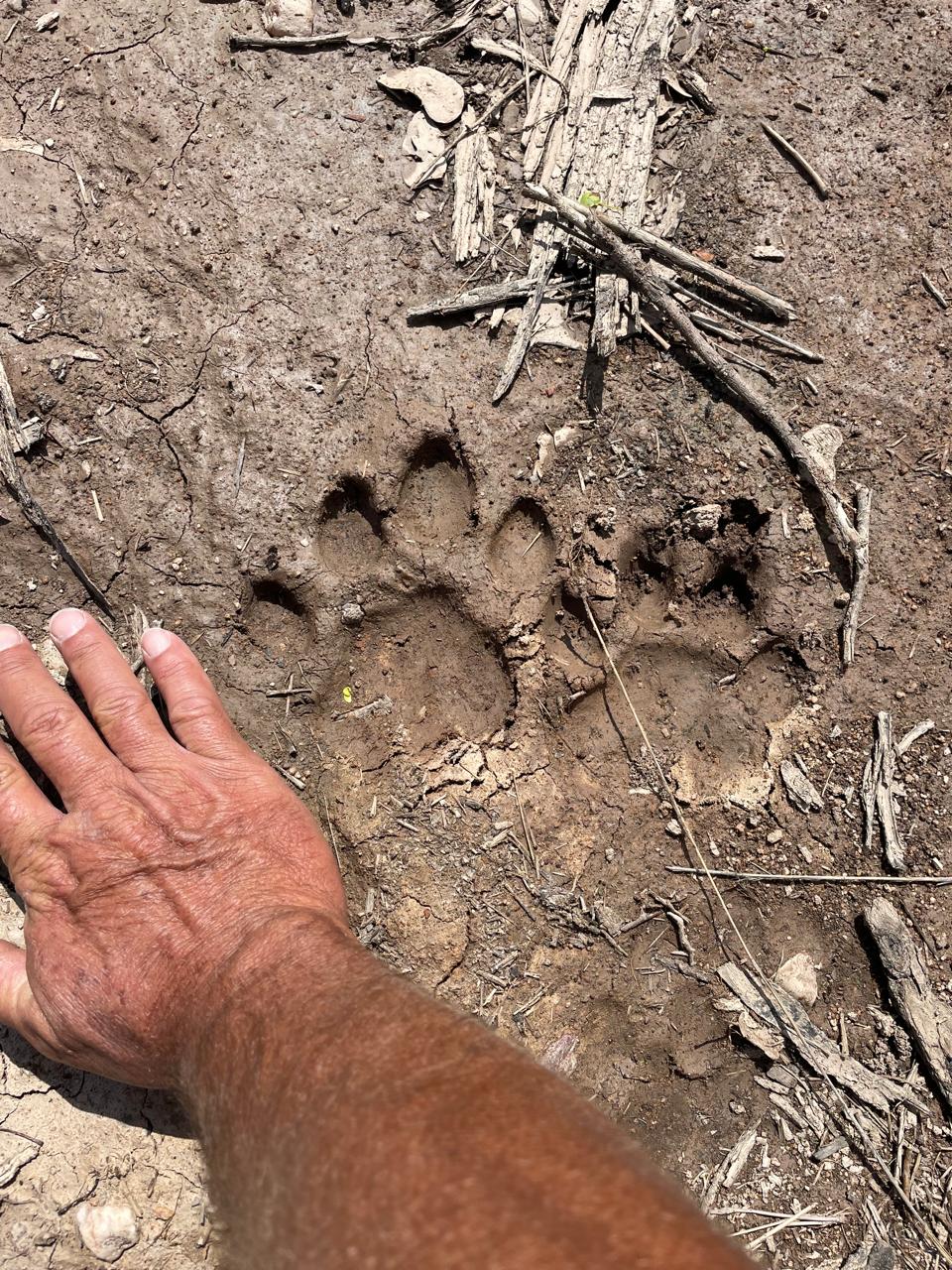
What the report records
The category table lists 24 mammals, 94 birds, 10 reptiles, 10 amphibians, 180 invertebrates, 68 wild flowers, 31 trees, 26 grasses and one fungus.
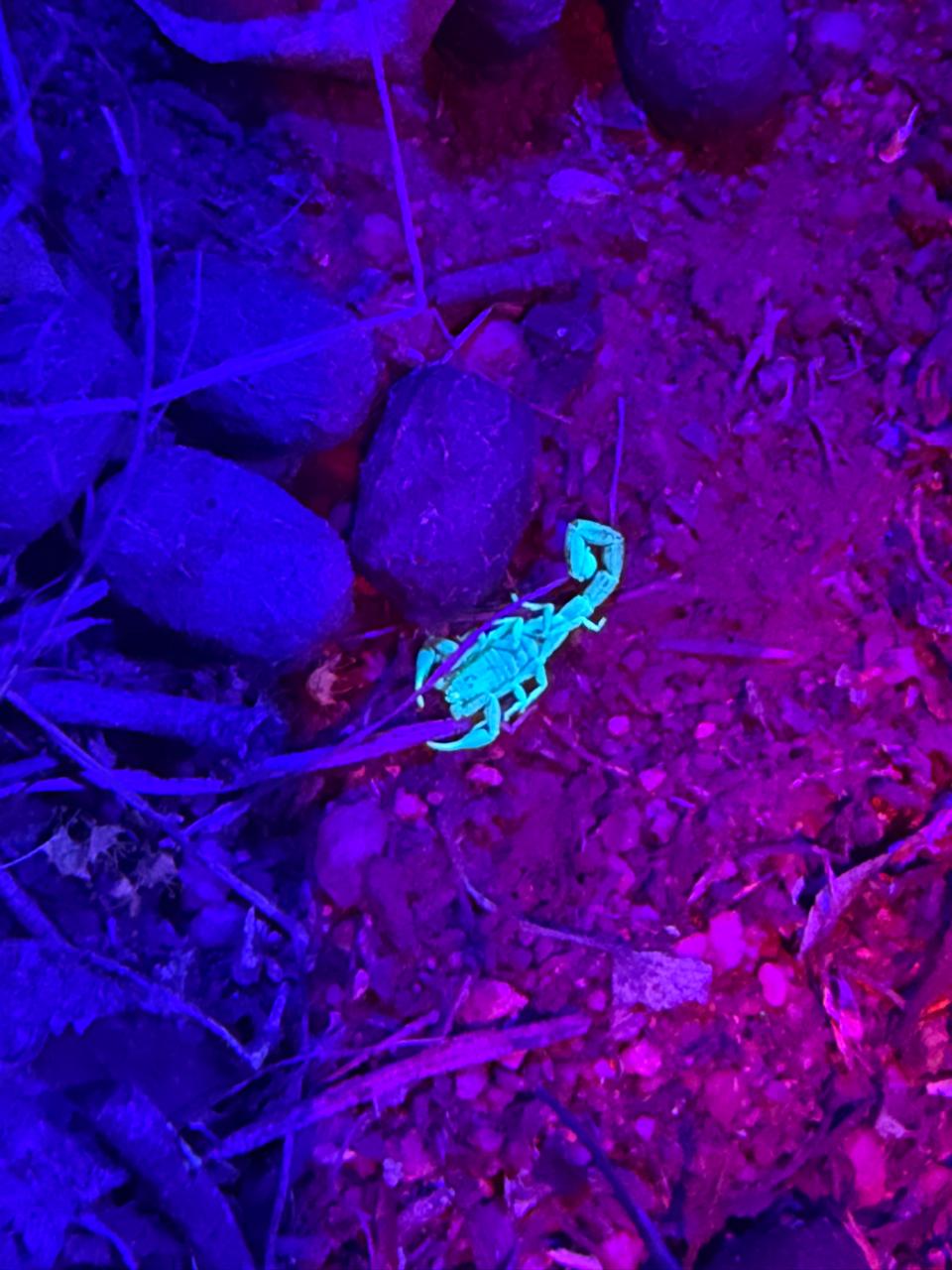
Biodiversity
Five researchers surveyed the 578 ha farm for 14 days in February 2026.
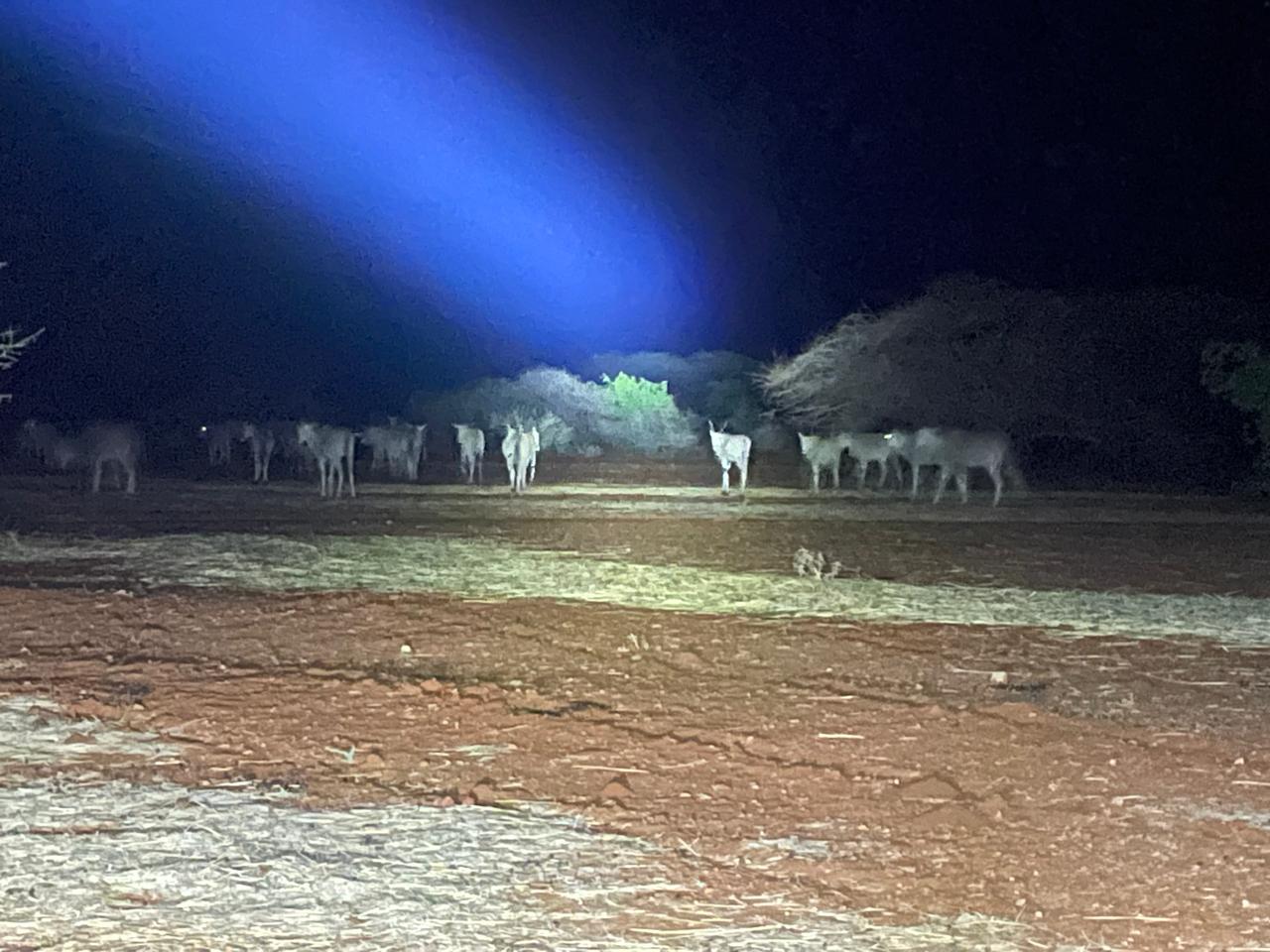
From 5–19 February 2026, five researchers surveyed Ostrolenka Farm using direct observation, night drives, tracks and signs, camera traps, birding surveys, vegetation documentation and selected traps. Their preliminary report records more than 440 species entries.
The category table lists 24 mammals, 94 birds, 10 reptiles, 10 amphibians, 180 invertebrates, 68 wild flowers, 31 trees, 26 grasses and one fungus.
The report narrative states a total of 445, while its printed category table sums to 444. Until the compiler confirms that one-entry discrepancy, this website uses the accurate conservative wording “more than 440”.
The report itself says the list is not definitive and that weather, season, survey effort and chance affect what is observed. A listed species is evidence of a survey record, not a guarantee that a guest will see it.
The full 176-page preliminary biodiversity report — methods, photographs, species lists and the compilers’ conclusion — is available on request. Email us and we’ll send it over.
Where we are
and hours from the ordinary.
Kudu Rest Camp sits in the Limpopo Province, in the borderland between Musina and Alldays. A short drive from the Venetia Diamond Mine, within reach of Mapungubwe National Park and the Beitbridge border.
Travel figures are planning estimates from the camp pin. Route, road, gate and border conditions can change; check live navigation before departure.
GPS · -22.3897, 29.3910 · Plus Code
Ready when you are
close to everything, quiet at night.
Tell us your dates and we'll confirm the right chalet.