Jacobin Cuckoo
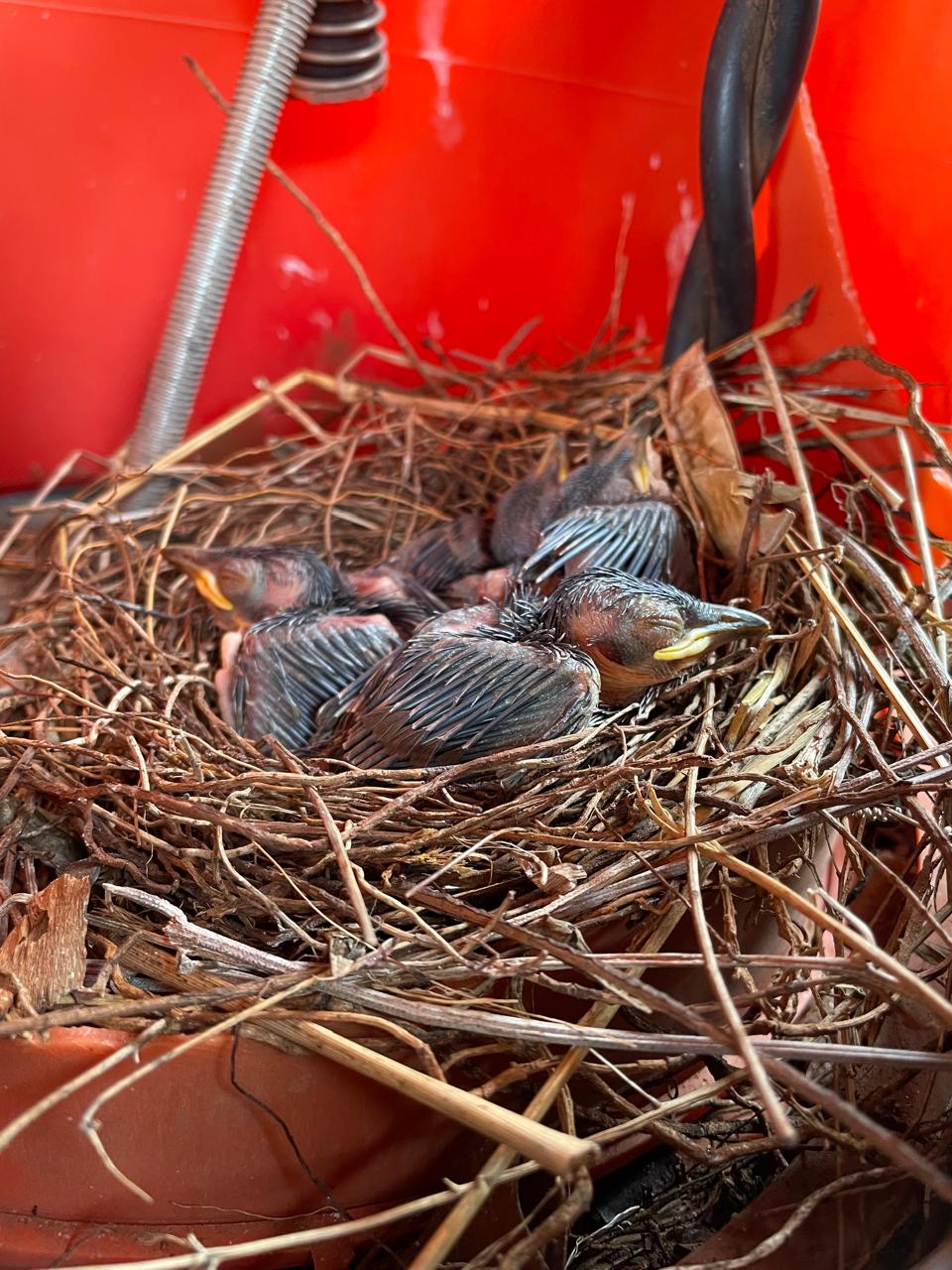
Pied summer migrant. Its arrival from East Africa is said to bring the rains.
For Birders
Hundreds of species across riverine bush, thornveld, and rocky outcrops — a birder's dawn-to-dusk playground.
Why birders choose us
Flexible rates — short breaks and long stays welcome.
Kudu Rest Camp sits inside one of southern Africa's richest birding belts — between the Limpopo River, the Soutpansberg, and the thornveld flats. 94 bird species were logged on a single 14-day survey in February 2026 alone — Kori Bustard, Jacobin Cuckoo, Golden-Tailed Woodpecker, African Grey Hornbill, Double-Banded Sandgrouse. Bring your binos, stay a few days, and let the bird list build itself.
The dawn chorus · 24-hour activity
Birds on a bushveld farm don't start and stop together. Francolin and hornbills call first; goshawks and eagles work the thermals mid-morning; sandgrouse arrive at water at dusk; nightjars pitch the night. Drag the cursor or tap play — see how the chorus builds and fades through a day at Kudu.
Each petal is a species. Farther from center = more active at that hour.
Three habitats in one stay
Kudu sits where three distinct habitats meet — mopane and thornveld flats, rocky hillside outcrops, and riverine vegetation along farm pans. That overlap is why a single 14-day February survey logged 94 species — and why the real list, across a full annual cycle, is estimated to exceed 220.
The property hosts five purpose-built hides over active waterholes. Outside of active hunting windows they are available to birders — and that is most of the year. Morning sits from 5am to 9am regularly turn up 40+ species before breakfast.
The bushveld here is classic Limpopo: Acacia nigrescens, mopane, marula, knobthorn. That mix supports the full suite of bushveld specialities — Golden-tailed Woodpecker, Bennett's Woodpecker, Brubru, Black-crowned Tchagra, White-bellied Sunbird, Marico Flycatcher, Pririt Batis, Red-billed Buffalo Weaver.
Summer migrants (October through March) add enormous diversity — European Bee-Eaters in flocks, Woodland Kingfisher calling from every dead branch, Jacobin Cuckoo, Diederick Cuckoo, African Paradise Flycatcher, Violet-backed Starling. Winter strips the tree cover thin and makes raptors obvious: Pale Chanting Goshawk, Gabar Goshawk, African Hawk-Eagle, Brown Snake-Eagle.
The camp itself is part of the list. White-browed Sparrow-Weaver colonies in the marula trees. Southern Yellow-billed Hornbill on the veranda each morning. Crested Francolin walking between chalets at dawn. Fiery-necked Nightjar at sundowner time — "Good-Lord-deliver-us" is the call.
Month by month
Limpopo birding has two distinct flavours — the migrant-rich summer and the specialist-heavy winter. Here is what each month brings.
Migrants still here in force. Breeding species calling. European Bee-Eater, Woodland Kingfisher, Jacobin Cuckoo, Violet-backed Starling, Red-chested Cuckoo. Hot — begin at first light, break midday, resume at 3pm.
Our February 2026 baseline survey logged 94 species in 14 days. Breeding activity still high, migrants plentiful, insect hatches keep insectivores busy. Arguably the richest single month of the year.
European Bee-Eaters flocking. Swifts and swallows gathering for the flight north. Raptors concentrate on the exodus — excellent for raptor photography. Last Woodland Kingfisher calls by month end.
Migrants gone. Resident specialists more conspicuous against thinning vegetation. First cool mornings make dawn chorus linger — hornbills, drongo, Black-crowned Tchagra, White-browed Scrub-Robin all vocal.
Cold mornings, warm days. Arid-country visitors start showing — Chat Flycatcher, Marico Flycatcher. Raptor numbers build. Pearl-spotted Owlet calling in daylight. Double-banded Sandgrouse at water at dusk.
Thin cover, concentrated water, sharp air. Kori Bustard on the open flats (tick that big one off). Raptor diversity peaks — African Hawk-Eagle, Black-chested Snake-Eagle, Brown Snake-Eagle, Martial Eagle sightings regular. Waterhole sits at dawn produce 30+ species before the sun is off the horizon.
Coldest mornings of the year. Bushveld is at its most transparent. Owls vocal — Pearl-spotted, African Scops, sometimes Verreaux's Eagle-Owl. First returning cuckoos late in month.
Red-chested Cuckoo's "Piet-my-Vrou" call signals real spring. Early Woodland Kingfishers. Resident species in fresh breeding plumage. Aloes flowering — sunbirds in mobs at Aloe excelsa stands.
European Bee-Eater first flocks. Wahlberg's Eagle returning to nest. Paradise Flycatchers arriving. Temperature climbing; start earlier each day.
All migrants back. Breeding season in full swing. First rains trigger the insect flush — insectivores everywhere. Nightjars calling by 7pm.
Afternoon thunderstorms reset the bushveld daily. Migrants settled. Some of the year's richest mornings — birds active after overnight rain cools the air. Festive crowd is light here; bird lists stay long.
On the property
in a week.
Birders welcome
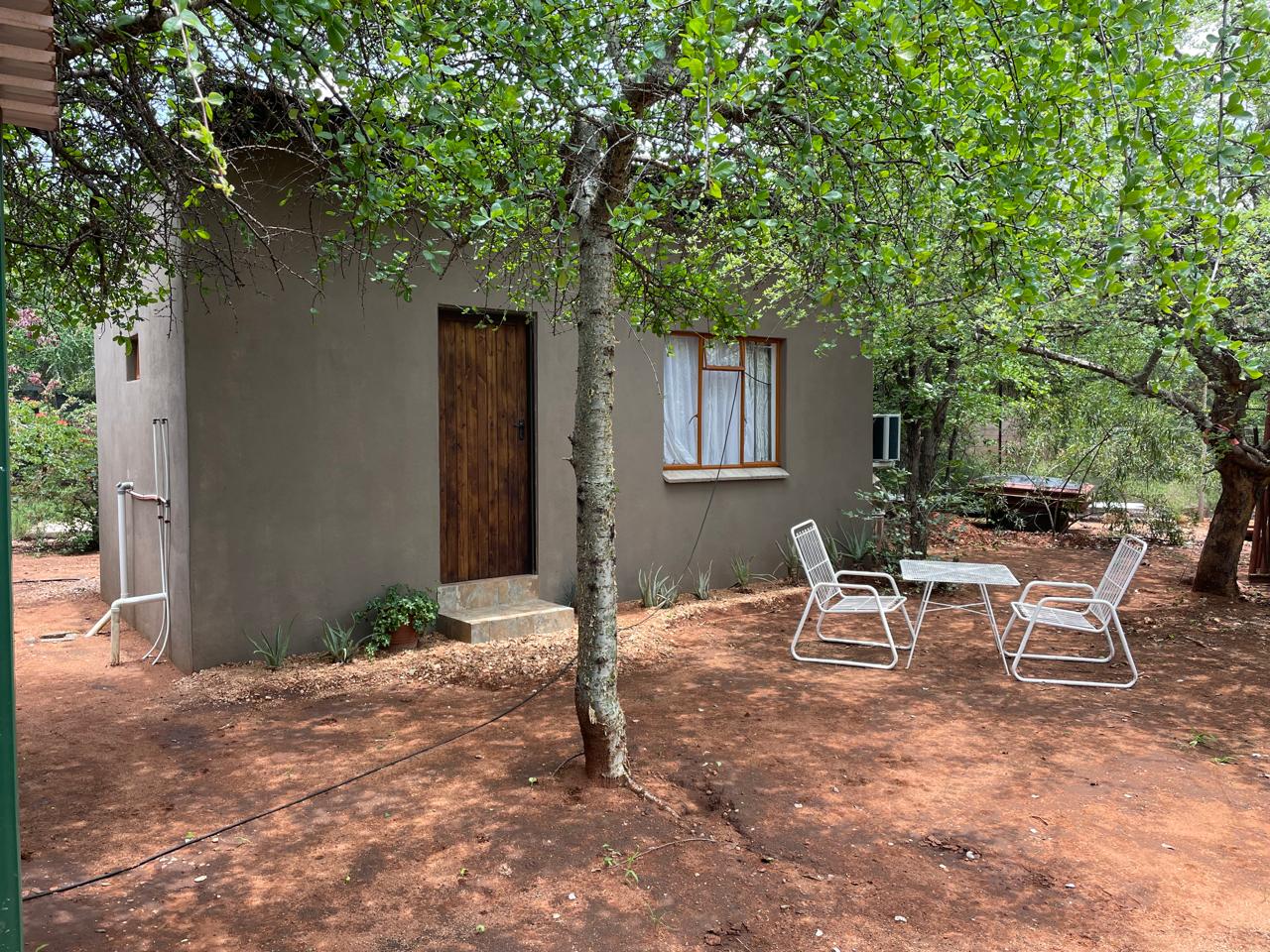
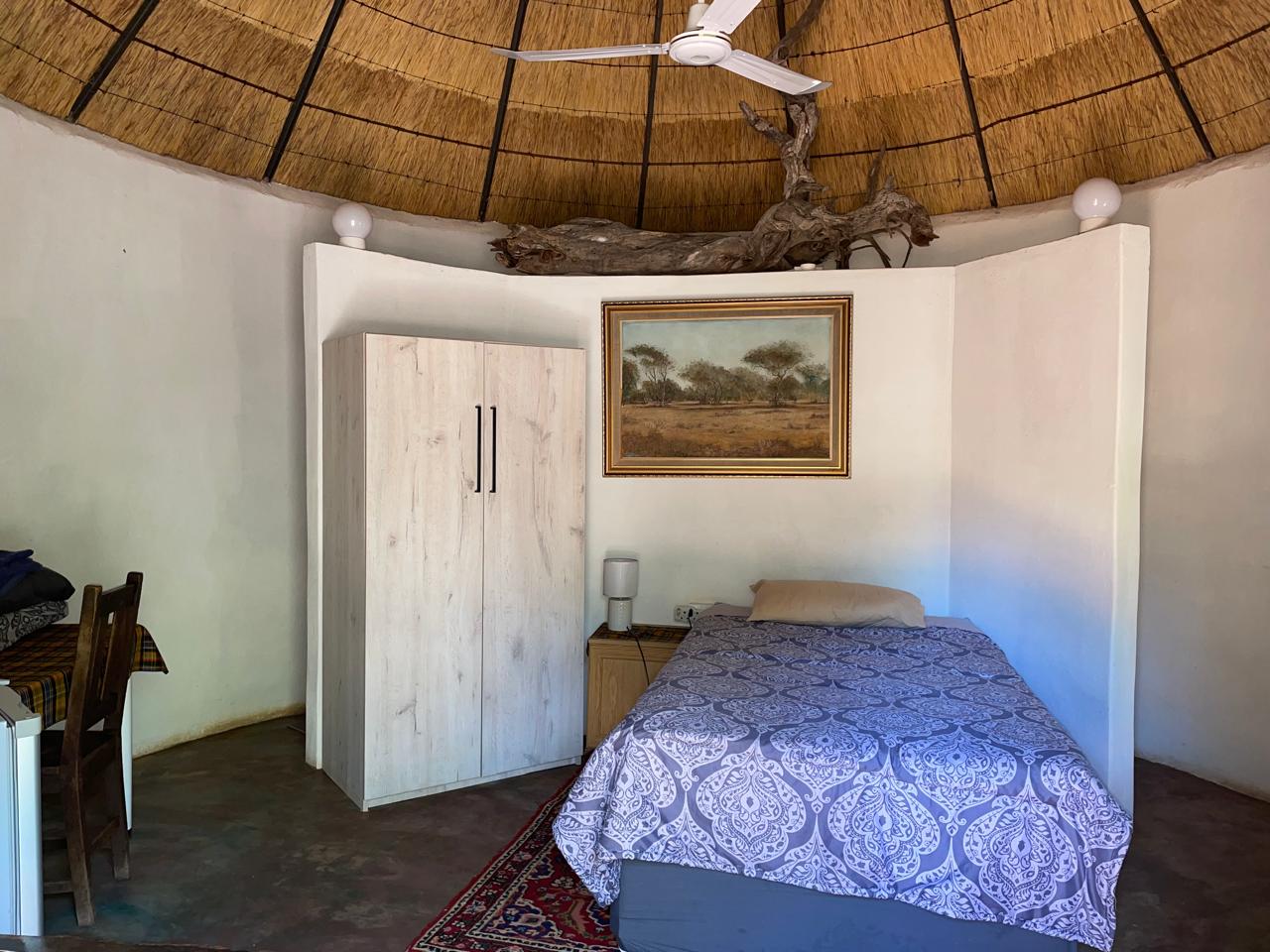
Comfortable chalets
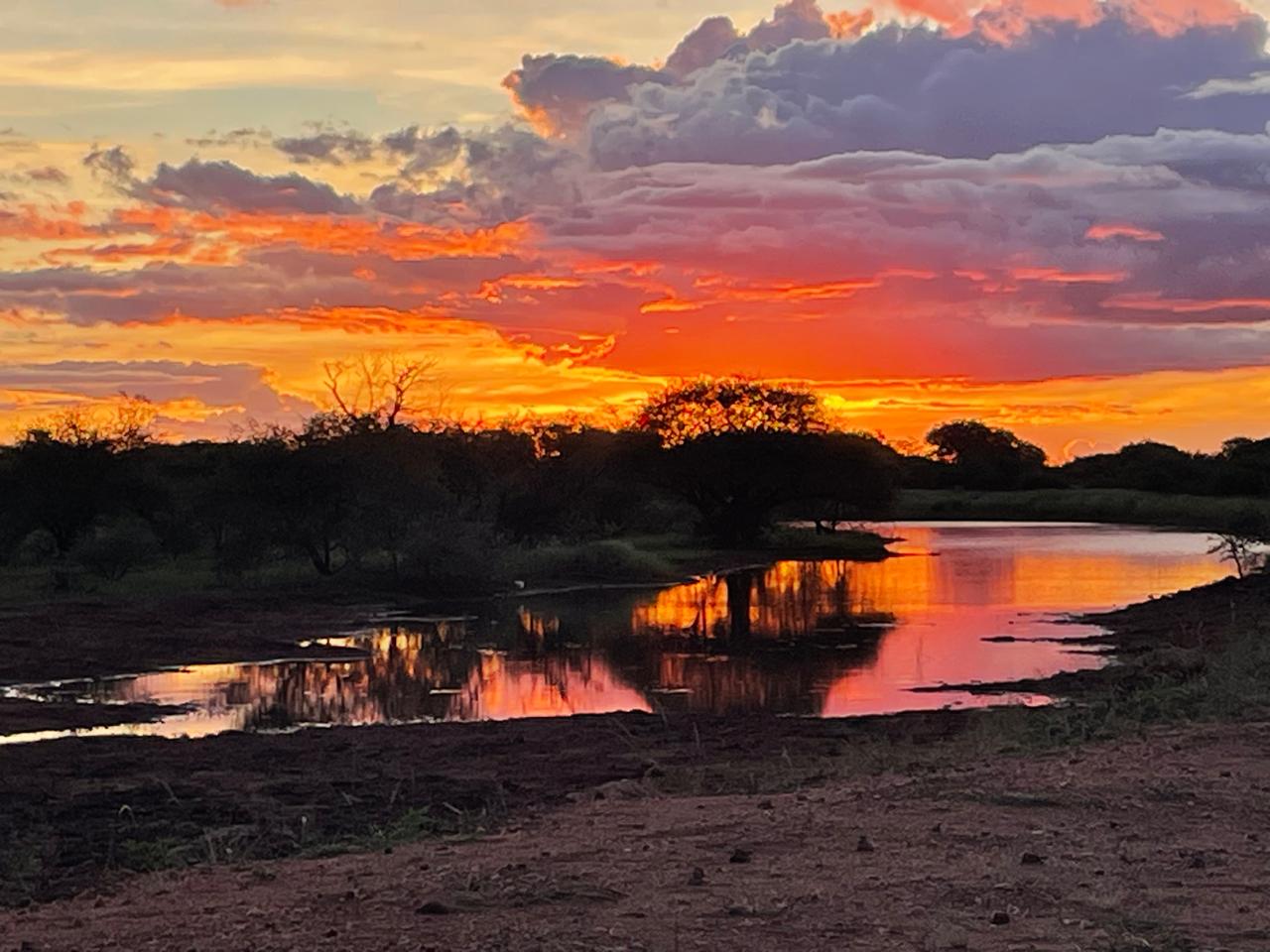
Bushveld sunsets Documented on the property
These are a few of the species recorded during the February 2026 survey and by regular guests. The full list grows with every visit — add yours at checkout.
Pied summer migrant. Its arrival from East Africa is said to bring the rains.
Bushveld speciality. Distinctive yelping call in the marula canopy.
Dusk visitors to the waterholes. Unmistakable "chuck-chuck-chuck" call.
Shier cousin. Our property hosts both species — you can tick them in one morning's drive.
The iridescent male is unmistakable. Females plain but diagnostic streak pattern.
Nest colonies across camp — thatched apartments in the marula canopy.
Get the most from your stay
Bushveld birding peaks between sunrise and 9am. Coffee in the chalet, then out before sunrise — breakfast on return at 9:30am suits most mornings.
Second activity window. A hide over water from 4pm through sunset builds a list fast, especially in winter.
Thermals rise between 11am and 2pm. Scan the sky from any shaded spot — raptor diversity can be extraordinary.
When hunters aren't booked, all five hides are yours. We share the map on check-in.
Limpopo ornithological ethics — use calls sparingly, never during active breeding, never on threatened species.
8×42 for general viewing, 10×42 or a scope for raptors and distant waterbirds. Lens bag: 400mm minimum for photography.
Roberts Bird Guide (app) is the definitive reference for southern Africa. Call library alone justifies the price.
Camp list is maintained — we'd love yours on departure. Many guests' sightings are now part of the baseline.
On-site
facilities & comforts
Dedicated restaurant area with veranda, social space, bar and kitchen — also hosts private functions.
A proper bush bar for sundowners, cold drinks and firelit storytelling.
Pool with a shaded terrace — a welcome cool-off after a hot bushveld day.
Central firepit plus private braai at each chalet — the bushveld evening done right.
Reliable across camp — strong enough for Teams calls, streaming, and remote work.
Every chalet climate-controlled — sleep well through Limpopo summers.
On-site laundry for long-stay guests — included weekly on monthly rates.
Cooked breakfasts, packed lunches and evening meals on request — no need to cook every day.
Five purpose-built bow-hunting hides spread across the farm — ethical, fair-chase positions over waterholes.
On-property range to zero rifles and re-check scope settings before the hunt.
Game-fenced property with year-round hunting exemption — book the dates that work for you.
Gated, fenced 578 ha — kids, pets and contractors all rest easy.
Where we are
and hours from the ordinary.
Kudu Rest Camp sits in the Limpopo Province, in a malaria-free pocket between Musina and Alldays. A short drive from the Venetia Diamond Mine, within reach of Mapungubwe National Park, and about an hour from the Beitbridge border.
Birders FAQs
answered here.
A competent birder staying four full days typically lists 90–130 species across the property and nearby. Our 14-day survey logged 94, but dedicated birders often exceed that because they work more habitats.
Yes, along designated birding routes outside of active hunting windows. A camp map and safe-zone guide is provided at check-in.
Local birding guides can be booked on request — roughly R900/day. Most birders here self-guide successfully, but guides add significantly to the raptor tally and the harder-to-find specials.
Very good — 1.5 hours by car. Classic Limpopo floodplain list: Pel's Fishing-Owl, African Finfoot, Tropical Boubou, Meves's Starling. Several guests build a week combining Kudu and Mapungubwe.
Fiery-necked Nightjar, Rufous-cheeked Nightjar, Pearl-spotted Owlet, African Scops-Owl, Southern White-faced Owl all possible. A sundowner on the veranda is often productive; deeper night walks by arrangement.
Yes, WiFi across camp. You can update your eBird list nightly — and we'd love to see the checklists you submit.
For sheer diversity: November through March (migrants here). For raptors and specialists: June through August (thin cover, concentrated water). February is the single richest month — confirmed by the 2026 survey.